CSS :before vs ::before & :after vs ::after
2 min read • Posted on January 17, 2023 (Edited on Jan 23, 2023)
#html #webdev #fundamentals #cssWhen reading CSS code, we sometimes see code using :before and other times with ::before (same for ::after).
Is there a difference between the 2 notations? Is one correct?
A bit of history
Section titled “A bit of history”In CSS2, the syntax used at the time was :before. This was confusing because CSS also had selectors like :hover, but they both had different semantic meanings.
So in Selectors Level 3, they decided to change the syntax for :before to ::before (and for legacy reasons, we can still use :before, but it is now deprecated).
The : notation isn’t deprecated as a whole, instead the old syntax was split into two:
:now represents pseudo-classes (and is still valid for:hoverfor instance),::represents pseudo-elements (and should be used for::before).
:pseudo-class
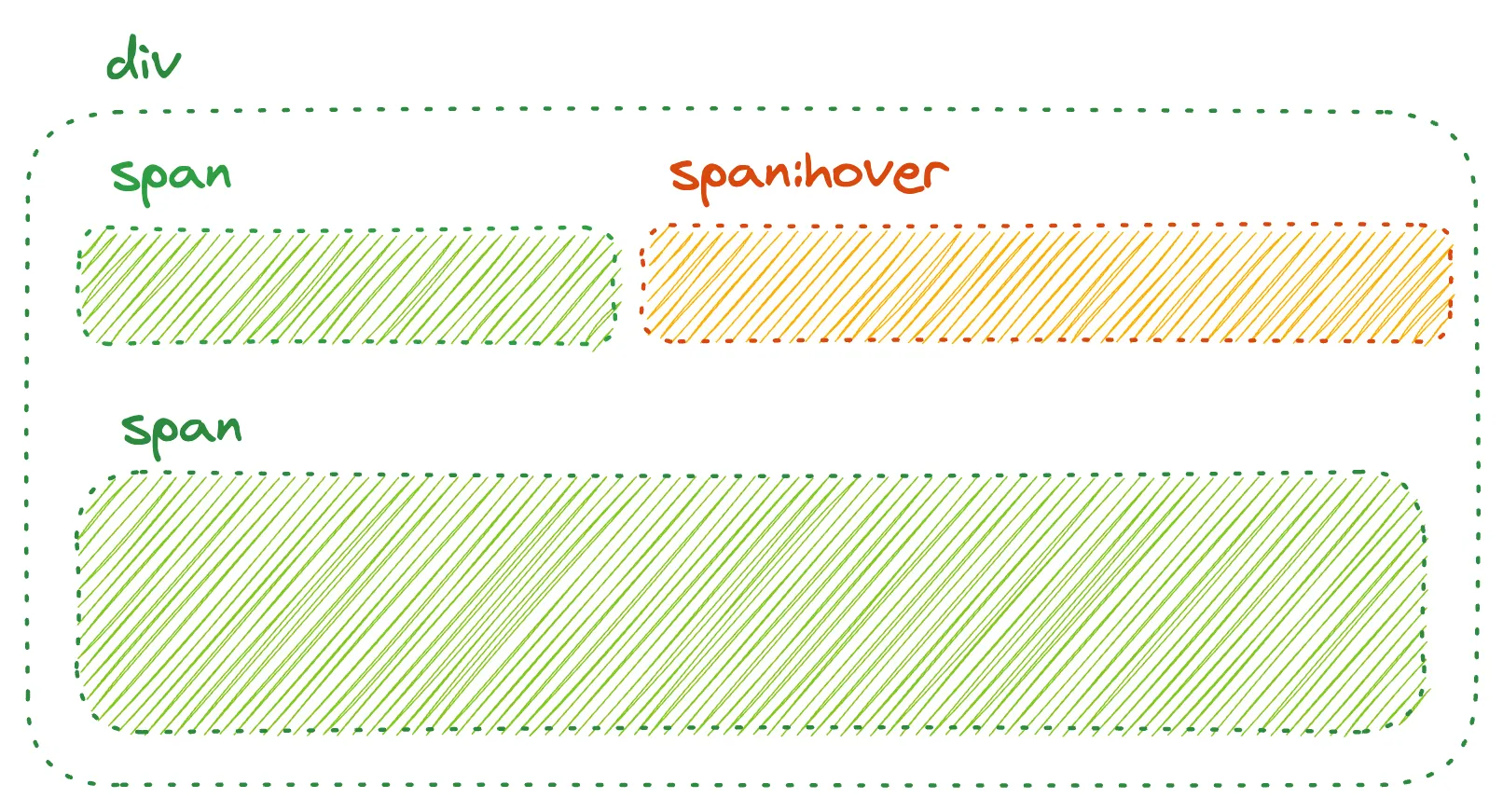
Section titled “:pseudo-class”Pseudo-classes represent variations of a state of an element. When the condition is satisfied, the whole element is selected.
A CSS pseudo-class is a keyword added to a selector that specifies a special state of the selected element(s).
Example
Section titled “Example”:hovermatches an element on hover:not(p)matches an element if it’s not ap:last-of-typematches an element that is the last of its siblings, and also matches a certain type selector.
See the full list in MDN
::pseudo-element
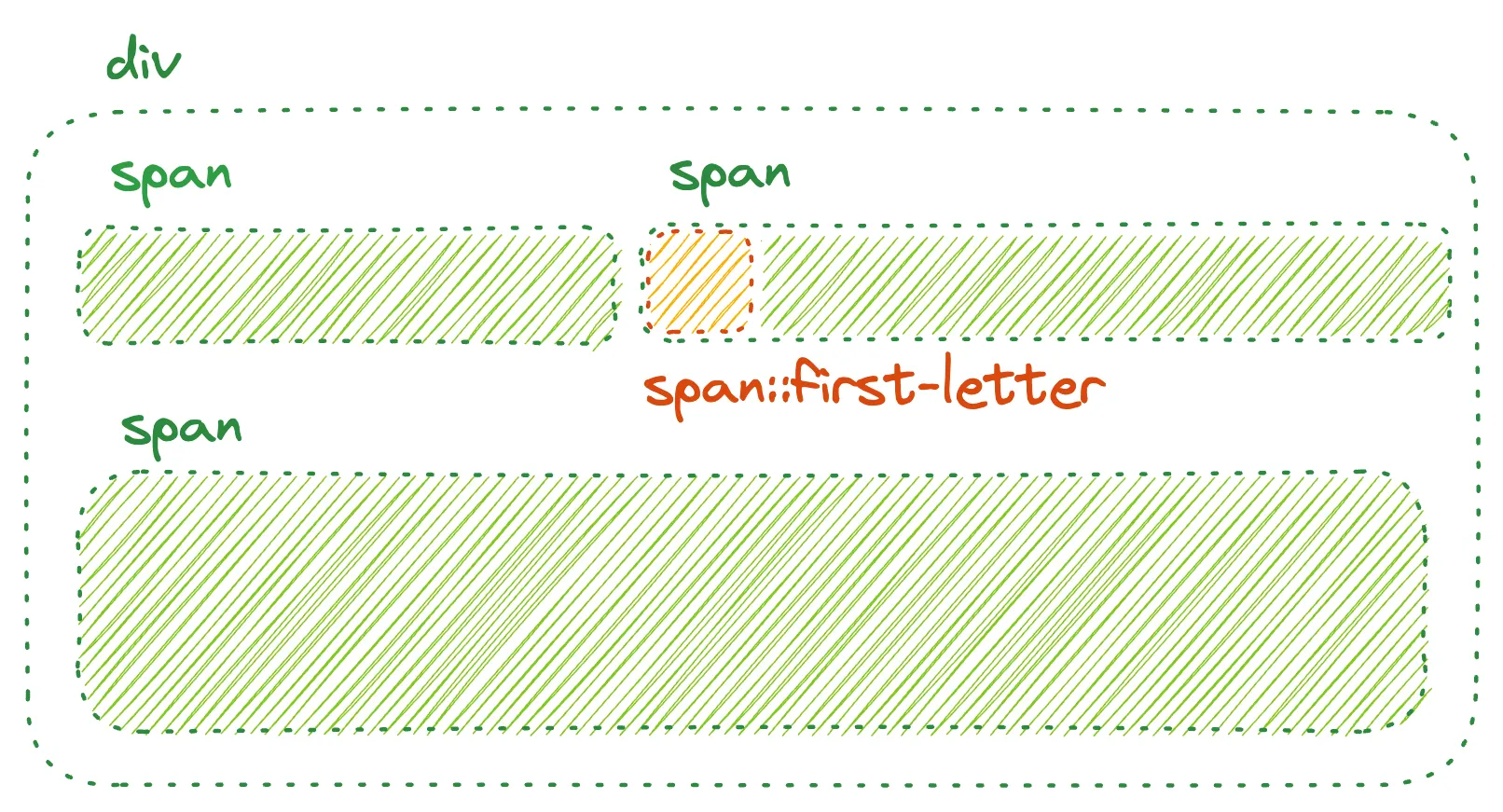
Section titled “::pseudo-element”On the other hand, pseudo-elements are parts of the original element. They represent fake HTML nodes within the selected element.
A CSS pseudo-element is a keyword added to a selector that lets you style a specific part of the selected element(s).
Example
Section titled “Example”::beforecorresponds to a slot just before this element,::first-lineselects the first line in the current element,::first-letterretrieves the very first letter of the element.
See the full list in MDN
